
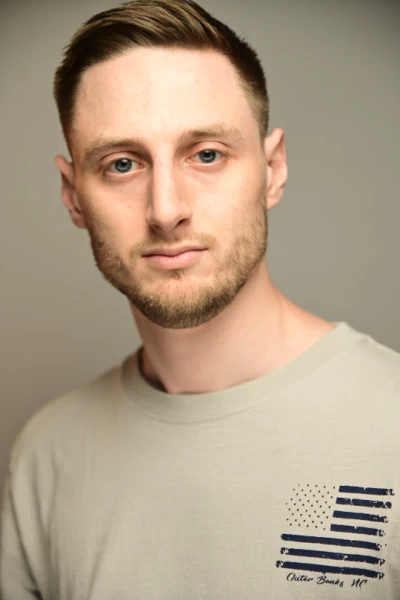
Brian Watts Interview
Brian Watts is a professional voice actor with credits in many games including Ground Branch, Ready or Not, War Thunder and BODYCAM (how good does that game look?!). In this interview, Brian shares his views on military games including Ghost Recon, and what goes into creating believable military voices, how tactical game Voice Over differs from traditional character acting, command presence, radio-style delivery, combat reactions, and how an actor avoids making every soldier sound like a stereotypical Hollywood action hero.
From War Thunder to OPERATOR: Brian Watts on the Next Generation of Tactical Shooters
Tactical shooters have changed dramatically over the last decade. Players are no longer satisfied with simply having realistic weapons, military uniforms, and large maps. Increasingly, they expect believable communication, convincing sound design, intelligent squad behavior, authentic performances, and environments that make them feel like they are actually operating as part of a military or tactical unit.
Voice actor Brian Watts has worked within that space across multiple military and tactical projects, including War Thunder, where he voices the U.S. Tank Commander, and OPERATOR, where he voices the game’s main Operator. He also voices in Bodycam, Ground Branch, Over the Top: WW1, and probably one of the most interesting tactical shooters Ready or Not.
We spoke with Watts about voice acting in tactical games, what makes military dialogue believable, and what franchises such as Ghost Recon may need to consider as the tactical-shooter genre continues to evolve.
Q: You have worked on several military and tactical games now. What attracts you to this genre?
Brian Watts:
I’ve always liked games that make you feel like you’re actually part of the situation instead of just controlling somebody carrying a rifle.
It helps that I grew up playing games like Medal of Honor: Underground and Ghost Recon, the music and the nostalgia of those games influenced me early as a child and I just continued to play more and more tactical shooter games, FPS/TPS style games. I think I have found memories growing up of playing Rainbow Six games, particularly Vegas and Vegas 2.
With tactical games, every little detail matters. The weapons matter, the movement matters, the sound matters, but the voices matter too. If you’re clearing a building and somebody suddenly sounds like they’re reading lines from a script, it can completely break that immersion.
That’s what I enjoy about this kind of work. You aren’t necessarily trying to sound theatrical. You’re trying to sound believable.
Sometimes the best performance isn’t the loudest or most dramatic one. It’s the one that sounds like something somebody would actually say when everything around them is going wrong.
Q: How does performing for something like War Thunder differ from performing for a character-driven game?
Brian Watts:
War Thunder is interesting because you’re dealing with a different kind of performance.
As the U.S. Tank Commander, you’re communicating information quickly. The player needs to immediately understand what is happening around them.
You’re dealing with commands, reactions, target information, damage, combat awareness, and all these little moments that help sell the feeling that there are actually people operating that vehicle. There isn’t always time for some massive emotional performance.
The realism comes from urgency, rhythm, confidence, and making the communication sound natural. And after recording hundreds of lines, you start realizing how important variation becomes too. You don’t want every command to sound identical.
Q: You also voice the main Operator in OPERATOR. Does that allow for a different kind of performance?
Brian Watts:
Absolutely.
OPERATOR gives me more room to lean into the personality of somebody actually operating in that tactical environment.
There is a difference between sounding like a generic military voice and sounding like somebody who has actually been dealing with dangerous situations for years.
An operator shouldn’t constantly sound like he’s trying to prove how tough he is. Granted some of my dialogue was creatively inspired by Escape from Tarkov and Battlefield 3. There is a lot of cursing in Operator don’t get me wrong, but to me that adds to the creativity and the overall lifelike atmosphere of the game. I definitely would not say it’s Hollywood based, it’s more aligned with how real military soldiers may talk, mostly vulgarity but with a mix of true professionalism.
Sometimes the calmest guy in the room is the one you believe the most, however the loudest guy can also be the one who feels like he’s got nothing to lose and wants to actually show you that.
That is something I really like trying to bring into these performances. Confidence without forcing it.
Q: Military games are notorious for exaggerated dialogue. What makes tactical dialogue believable to you?
Brian Watts:
Less Hollywood.
That doesn’t mean the dialogue has to be boring. Soldiers, police officers, operators, and people working dangerous jobs joke around. They swear. They get irritated. They get scared. They make stupid comments at terrible times.
That humanity is what makes something believable. If every person talks like they’re delivering a speech from a recruitment commercial, you’re going to lose the player.
There should be moments where somebody sounds exhausted. There should be moments where somebody is pissed off. There should be moments where somebody says something funny because that’s how they’re dealing with stress.
Then, when something serious happens, the tone changes immediately.
This is what defines character as well, my character in Ready or Not is not going to say the exact same thing as my character in Operator, or War Thunder, Ground Branch, Broken Arrow, Gates of Hell, Over the Top ect… All those characters are meant to be unique and have their own personality.
That contrast is extremely powerful.
Q: Do you think voice acting is sometimes overlooked in tactical shooters?
Brian Watts:
Definitely.
People understandably focus on weapons, ballistics, graphics, animations, AI, and map design. But sound is constantly communicating with you. You’re hearing your squad before you even see them sometimes. You’re hearing somebody call something out behind you. You’re hearing panic when something goes wrong. You’re hearing somebody trying to keep everybody under control.
That becomes part of the player’s subconscious understanding of the environment.
Bad voice acting stands out immediately. Really good voice acting sometimes does the opposite. You don’t consciously think about it because it feels like it belongs there.
Take a listen to Battlefield 1, Battlefield 3 the screams are iconic and are still listened to today. Take a listen to Modern Warfare 2 when Washington D.C is invaded, those radio chatter calls are insane because you actually feel the pure adrenaline and panic as it sets in, to me that is huge.
That’s usually the goal.
Q: How does Ready or Not compare with Ghost Recon and your work on tactical shooters like Operator?
Brian Watts:
Ghost Recon and Ready or Not are actually a bit more similar than I would classify Operator being. Ready or Not was directly inspired ironically by both SWAT 4 from 2004 and the classic Rainbow Six video game series.
In terms of how they compare voice wise with Operator. Well in Ready or Not, I’m playing a main suspect called the Accomplice on the map Lethal Obsession, formally known as Ridgeline. My voice lines are 80% curse words at the SWAT Operators and funny enough I actually wanted to include gameplay on my visual demo for conventions but because it was so vulgar I had to cut out a huge chunk of the demo.
Ready or Not is basically me being able to express my bad guy side while Operator is me being able to express wanting to put a bullet in the bad guys, though I guess both could be true.
Q: Ghost Recon is one of the biggest names associated with tactical shooters. Do you think the franchise can still compete with newer tactical games?
Brian Watts:
Absolutely, but I think it has to understand what players currently want from tactical games. Ghost Recon already has something most developers would kill to have: identity. People know that name. There is history behind it.
But the tactical genre has changed. Players have experienced games that are slower, harsher, more immersive, and sometimes much less forgiving than traditional shooters. So I don’t think Ghost Recon should simply try to copy another game. I think it should ask what originally made Ghost Recon special and then modernize that philosophy.
Give players freedom. Give them meaningful tactical decisions. Make the squad important. Make reconnaissance important again. And make the world react intelligently to what the player is doing.
Q: What do you think Ghost Recon could learn from the newer generation of tactical shooters?
Brian Watts:
Consequences.
That’s probably the biggest thing. A tactical decision should actually matter. If I decide to enter through the front door instead of going around the building, that should change what happens.
If I make too much noise, the enemy should react. If somebody on my team goes down, that should matter. If I screw something up, the game shouldn’t always immediately forgive me.
Players enjoy feeling like their decisions have weight. That doesn’t mean everything needs to become an ultra-hard military simulator. There is a middle ground. You can make something accessible while still making the player think.
Q: What about squad AI?
Brian Watts:
That is huge.
If you’re making a Ghost Recon game, your squad should feel like one of the most important parts of the entire experience. I want teammates that appear to understand what I’m trying to do. If I’m watching one direction, maybe they’re watching another. If we’re entering a room, everybody shouldn’t pile through the exact same doorway like they’re standing in line.
Those little things matter. And voice acting ties directly into that. Your teammates should communicate what they’re seeing and doing. If somebody says they’re covering a hallway, I should believe they’re actually covering that hallway.
The characters need to have personality, they don’t just need to be numbers on a board. I want them to have aspirations, attitudes, things they do when they feel they must. They need to feel like real human operators. The voice line and the AI behavior need to support each other.
Q: How important is environmental audio in creating that immersion?
Brian Watts:
Massively important. A good tactical game should sometimes make you nervous when nothing is happening. Hearing something moving upstairs. A distant gunshot. A radio transmission. A vehicle somewhere outside. Somebody breathing harder because they’ve been running. Those sounds start telling a story before combat even begins.
Silence can also be incredibly effective. If everything suddenly becomes quiet, the player starts paying attention.
Q: Do you think developers should work more closely with actors when creating tactical dialogue?
Brian Watts:
I think collaboration helps tremendously. Actors sometimes notice things about dialogue because we’re physically having to say it. Something can look perfectly fine on paper and then sound completely unnatural when somebody actually speaks it. Sometimes changing two words makes the entire line feel better.
And with military dialogue especially, rhythm matters. People under pressure often aren’t speaking in perfectly constructed sentences. Communication becomes shorter. More direct. Sometimes fragmented.
Letting actors and directors experiment with that can make a huge difference.
Q: Is there a danger in taking realism too far?
Brian Watts:
Absolutely. Realism isn’t automatically fun.
If a game recreated every single irritating or boring aspect of real-world operations, most people probably wouldn’t want to play it.
I think right now we are on the precipice of something revolutionary; another game I voiced in ‘BODYCAM’ is doing something no other game has done before, it’s quite literally taking dynamic gunshot sounds, realistic reload and stress systems and putting them all together. I think personally Bodycam is the closest we have come to real life without crossing that boundary just yet, and that can be both a good and bad thing.
The important thing is believable realism. You’re creating the illusion that the world follows understandable rules. The player should believe the weapon has weight. They should believe enemies are dangerous. They should believe their squad is communicating. They should believe that getting caught in a terrible position was probably their mistake.
That is more important than simulating absolutely everything. However the other important thing is that we need to remember… It’s just a video game.
Q: You have professional experience outside voice acting that overlaps somewhat with tactical environments. Does that influence your performances?
Brian Watts:
I think any experience where you’ve been around radios, command structures, stressful environments, or people who work in public safety gives you a slightly different perspective.
You start understanding that people don’t necessarily become these dramatic action heroes when something happens.
A lot of communication becomes surprisingly straightforward. Somebody needs information, and they need it quickly. That mindset definitely influences how I approach tactical characters. I’m always thinking, “Would somebody actually say this right now?”
Q: Tactical games sometimes use constant profanity (SHITBALLS?) to make characters sound authentic. Does that work?
Brian Watts:
Sometimes. Profanity can absolutely be realistic. But if every sentence is somebody screaming profanity because the writers want them to sound tough, it becomes ridiculous pretty quickly.
It needs context. A character casually swearing while talking to his squad can feel very natural.
However in Saving Private Ryan for example, you don’t hear someone screaming MF every 5 minutes even though on the beaches of Normandy it absolutely would be justified, same as in Gates of Hell. I couldn’t just scream things because I wanted to, we had to adhere to both the rating regulations but also the request of the team.
Somebody suddenly screaming because rounds are hitting the wall beside him can feel natural. But if everybody constantly sounds like they’re trying to win an argument in a Call of Duty lobby, you’ve gone too far.
Q: What would you personally like to see from the next generation of tactical shooters?
Brian Watts:
I want worlds that feel less scripted.
Give me enemies who react differently. Give me teammates with personality. Give me missions where something doesn’t always happen exactly the same way. Let the weather affect how I’m approaching something. Let civilians complicate the situation. Give me intelligence that might be incomplete.
Make me decide whether the information I’m getting is reliable. And give the characters enough humanity that I actually care when something happens to them.
I think a lot of the more niche indie Tactical Shooters are getting it right. I recorded once for a project where it was both my screams but also the way I ran, the sounds I made when going prone, even the snacks and drinks I would eat in the game… It all had to be replicated in a vocal setting which was new but unique to me.
Experiencing pain in your chest versus your leg, the sounds would be different; agonal breathing, coughing, constant moans or grunts. That’s where I think tactical games can continue growing.
Q: Would you be interested in working on a franchise such as Ghost Recon?
Brian Watts:
Of course. Ghost Recon is one of those franchises that has been associated with tactical gaming for decades. Being that I grew up on almost all the Ghost Recon games, getting to work with that would be a dream for me. Being able to contribute to something with that history would be incredibly exciting.
But even beyond Ghost Recon specifically, I want to keep working with developers who understand how important performance is to immersion. There are so many incredible tactical projects being developed now, from smaller independent teams to major studios.
It’s a really exciting genre to be working in.
Q: After War Thunder, Operator and other Tactical Shooters, what do you hope players associate with your performances?
Brian Watts:
Believability. That’s probably the biggest compliment somebody could give me. If somebody hears one of my characters and says, “That actually sounds like somebody who belongs in this world,” then I’ve done my job.
I’m not trying to make every character sound like Brian Watts. Unfortunately that can happen though when you mix video games, like my work in Ready or Not with Gates of Hell then play Operator and it sounds like the Accomplice from Ready or Not or the U.S Soldier in Gates of Hell, that part is tricky. The difference to me is that each role presents a new character
I’m trying to make the player forget there’s an actor standing behind a microphone. When the player stops hearing the performance and starts hearing the character, that’s when it works.
The Future of Tactical Gaming
Thank you Brian for this interesting insight into the thoughts of a gaming voice actor! The tactical-shooter genre is no longer defined exclusively by realistic weapons and punishing difficulty. Although, the level of realism is certainly making incredible leaps – look at what BODYCAM has done with weapon reloads for example – it’s incredible!
Its future may depend just as much on believable worlds, intelligent squad behavior, reactive environments, convincing sound design, and performances that make virtual soldiers and operators feel human.
For Brian Watts, that evolution presents another challenge for voice actors. The objective isn’t simply to sound tough. It’s to sound like you belong there.
And whether the next generation is led by independent tactical shooters, established franchises such as Ghost Recon, or games that have yet to be announced, immersion may ultimately come down to hundreds of details that players barely notice until one of them feels wrong.